Recycled PET Pellets
Eolas Prints Recycled PET (rPET) pellets are a 100% post-consumer recycled feedstock for pellet-fed and large-format 3D printing — a lower-cost, lower-carbon alternative to virgin PETG granulate. Made from recycled plastic bottles and European-made, these bottle-grade rPET pellets close the material loop on one of the most widely produced and least-recovered plastics in the waste stream. Sometimes sold as recycled PETG or rPETG pellets, they deliver mechanical properties closely comparable to virgin PETG: good toughness, moderate heat resistance, and a natural light-blue translucency — making them a credible circular-economy choice for Large-Format Additive Manufacturing (LFAM) and Fused Granulate Fabrication (FGF).
Key Properties
| Material | Recycled Polyethylene Terephthalate (rPET / recycled PETG) |
| Source | 100% post-consumer recycled bottles |
| Recycled content | 100% — circular, lower-carbon feedstock |
| Food-contact-safe raw material | Yes — bottle-grade rPET resin (see note below) |
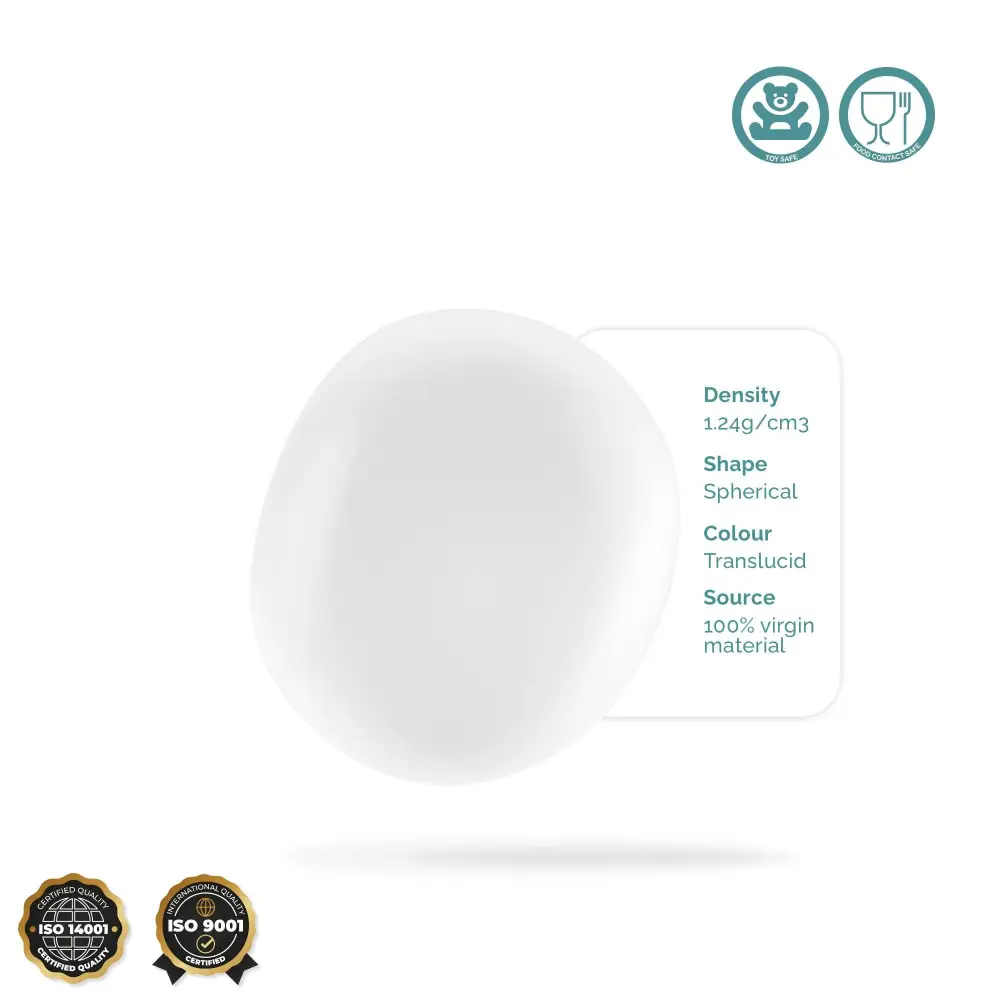
| Density | 1.38 g/cm³ |
| Hardness | Shore D87 |
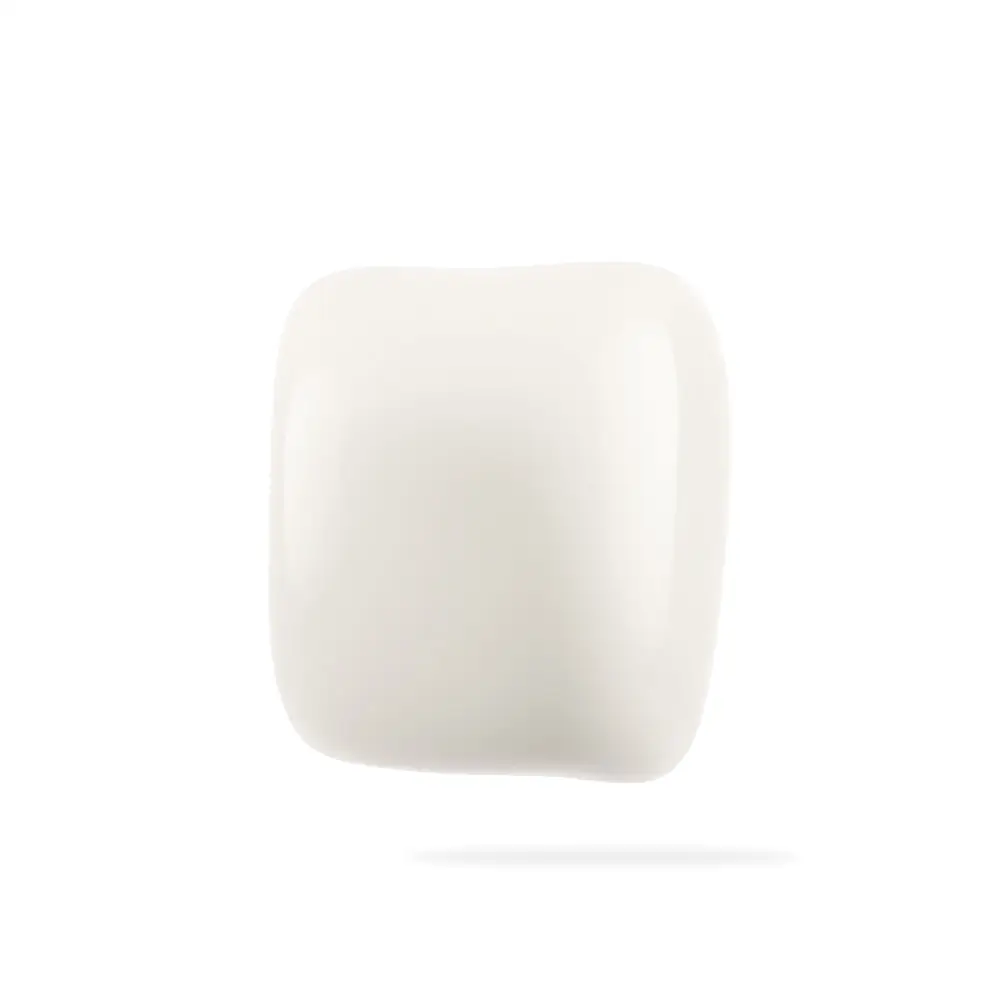
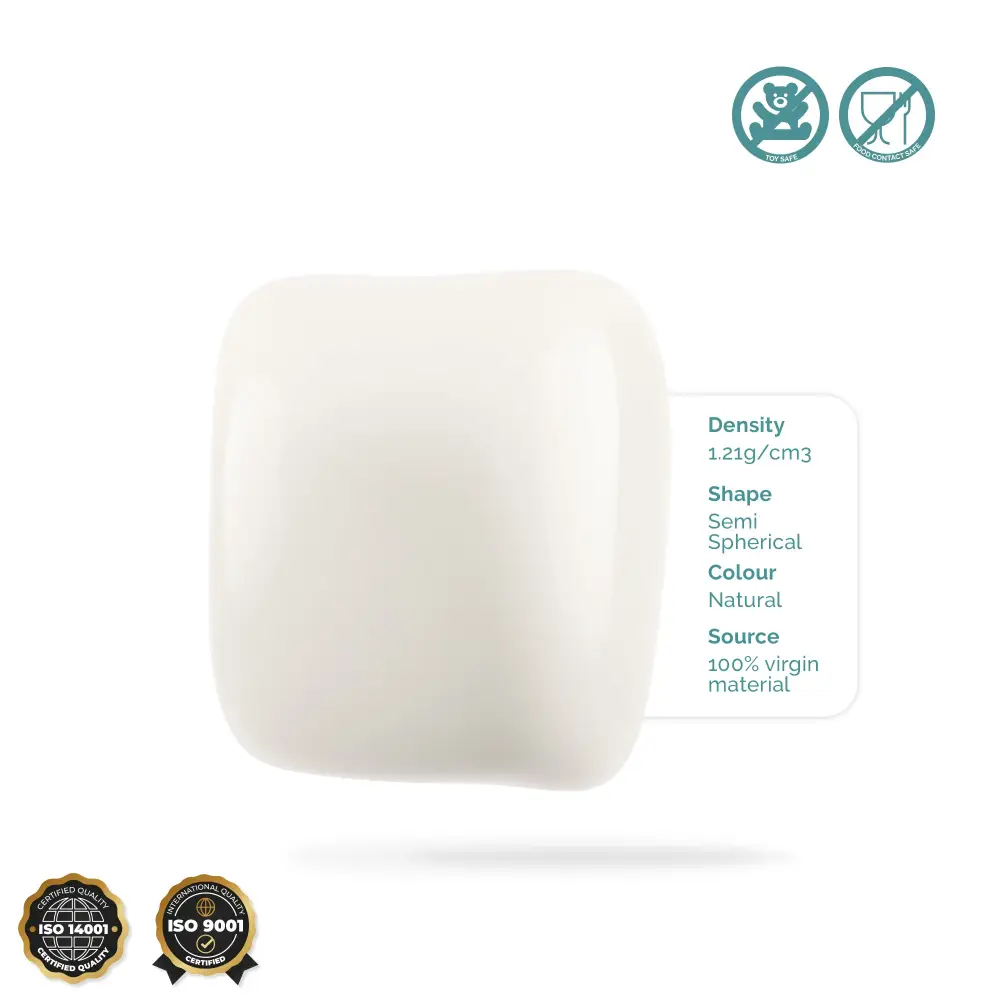
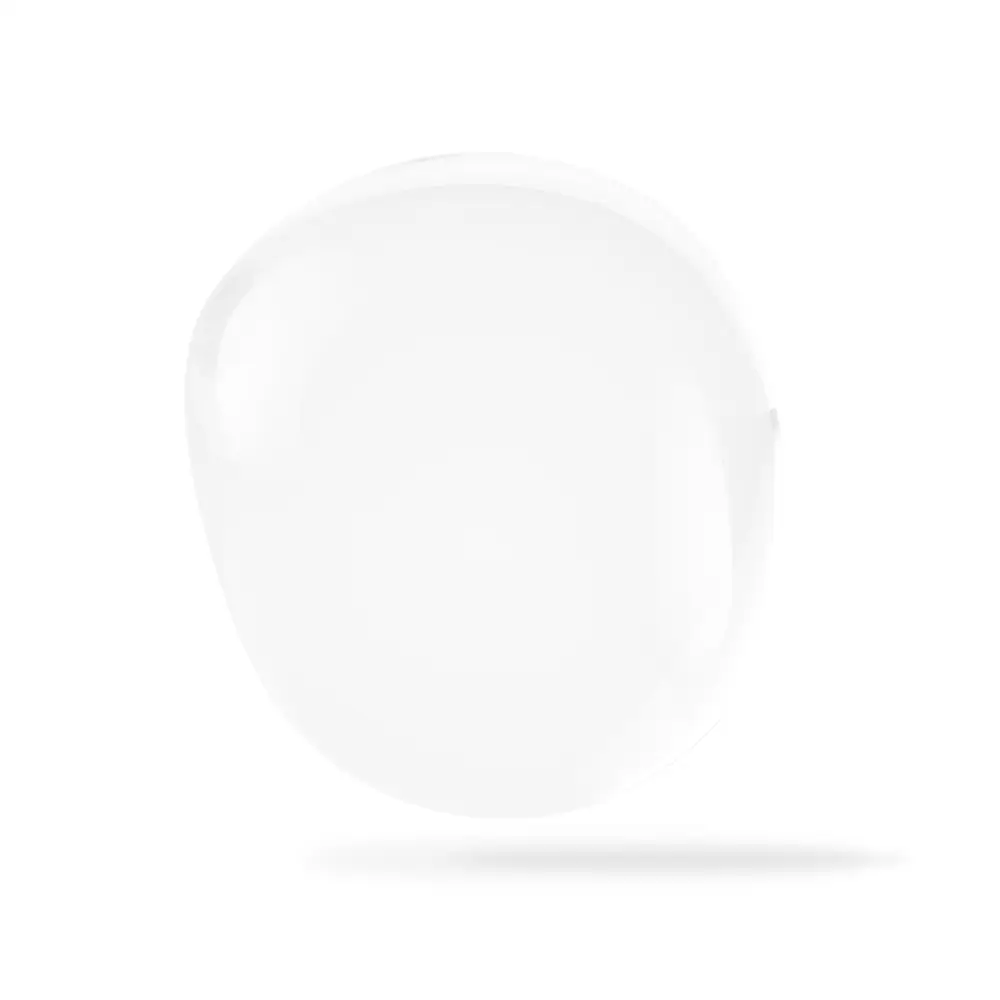
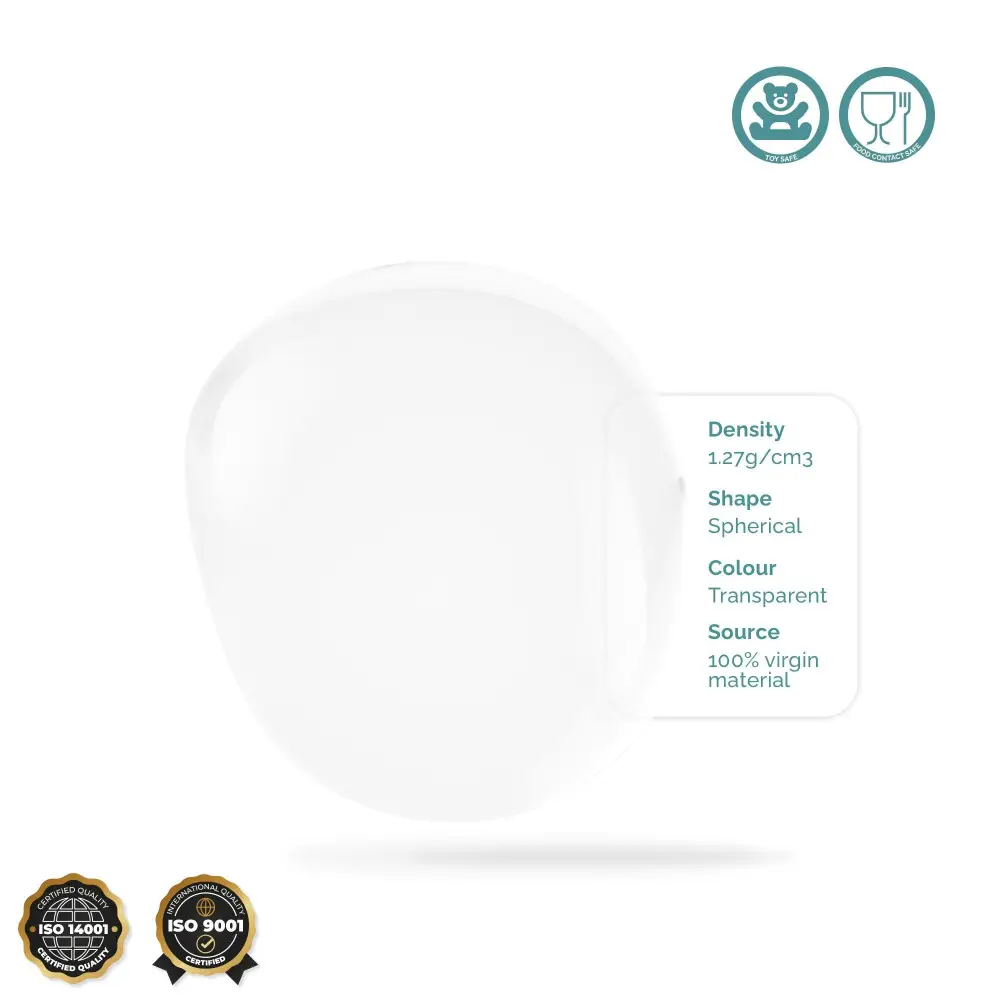
| Pellet size | 2–3.5 mm (spherical) |
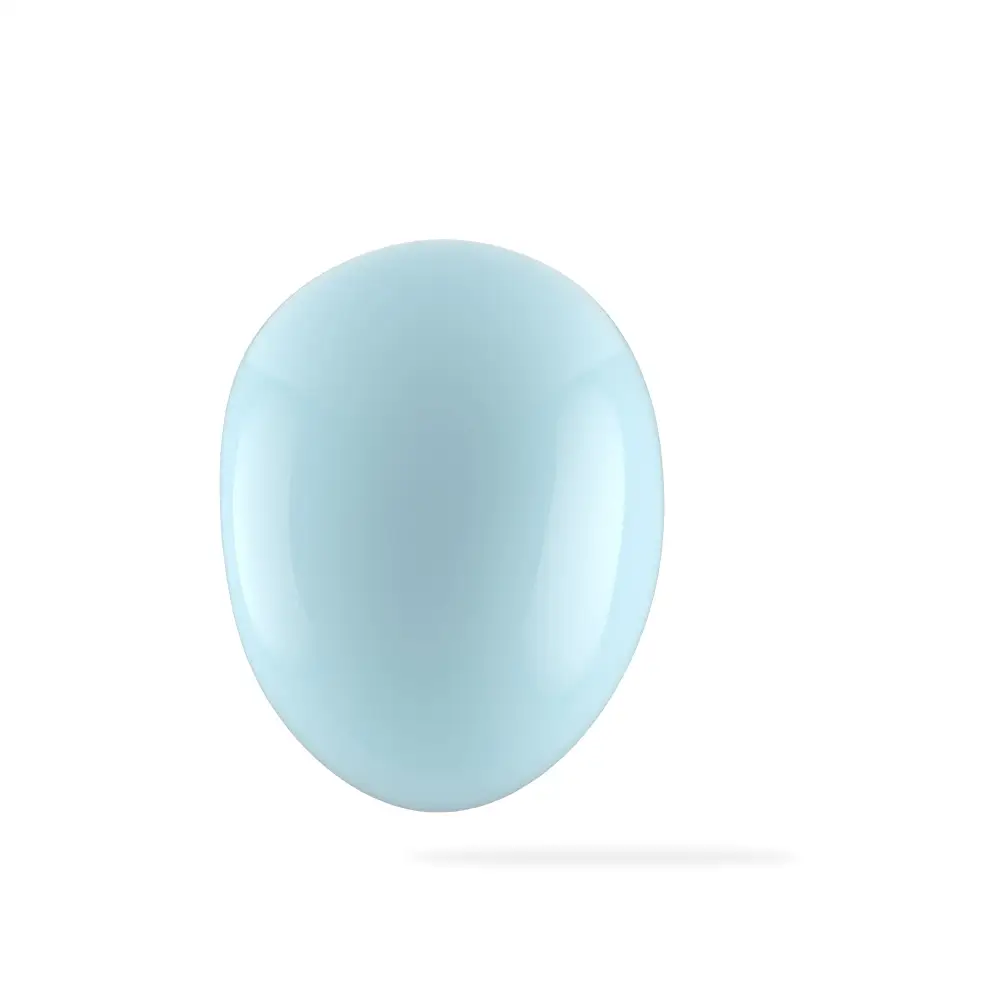
| Colour | Light blue, translucent (slight batch variation — inherent to recycled material) |
| Compliance | REACH statement on file (downloadable) |
| Moisture sensitivity | High — dry before use |
| Available sizes | 500 g / 1 kg — bulk big bags available on request |
A Note on Food Contact
These are genuine bottle-grade rPET pellets — the same recycled PET resin used to manufacture new drinks bottles — so the raw material is food-contact safe. That certification applies to the raw pellet feedstock, not to finished printed parts. 3D-printed surfaces contain microscopic gaps between layers that can harbour bacteria, and most printers use brass nozzles that may introduce trace metals into the print. For this reason, no 3D-printed object can be guaranteed food-safe by the material alone. If you intend a part for food contact, print it with a stainless-steel nozzle and apply a food-safe sealant — and assess suitability for your specific use. This remains the responsibility of the maker.
Recommended Print Settings
| Nozzle temperature | 230–250°C (printer-dependent) |
| Bed temperature | 70–85°C |
| Drying | 65–70°C for 4–6 hours before printing |
| System | Pellet-fed FGF extruders and large-format (LFAM) printers |
| Enclosure | Helpful for large parts; not mandatory |
Dialling In Your Settings
rPET shares PETG's printing behaviour, so the same tuning applies. New to recycled PET or fine-tuning a fresh batch? These guides walk you through it: our complete rPET pellets buyer's guide, our PETG, TPU & ASA settings guide, how to fix stringing and oozing (PET's most common issue when printed wet), and first-layer & bed-adhesion troubleshooting. For everything in one place, see our complete troubleshooting & calibration guide.
Recommended Applications
- Large-format (LFAM) and high-volume pellet printing where material cost per kilo is decisive
- Sustainable functional parts with a recycled-content or circular-economy requirement (procurement, public sector, ESG)
- Functional prototypes, enclosures, brackets and structural components for moderate-temperature environments (up to ~70°C under light load)
- Projects that need a European-sourced, ship-from-stock recycled material rather than imported feedstock
rPET vs Virgin PETG
rPET and virgin PETG are chemically closely related — both are polyethylene terephthalate. rPET costs less per kilo, carries a significantly lower carbon footprint (producing rPET uses roughly 60% less energy than virgin PET from petroleum feedstock), and prints almost identically. The trade-off is colour consistency: rPET shows slight batch-to-batch variation inherent to any 100% recycled material — rarely an issue for functional parts. For guaranteed virgin-grade colour and tolerance, choose our virgin PETG pellets instead.
European-Made · Shipped from Stock
These rPET pellets are European-made from 100% post-consumer feedstock by a specialist manufacturer certified to ISO standards, and shipped from Eolas Prints' stock in Cantabria, Spain. A REACH statement is available to download. Available from 500 g and 1 kg up to bulk big bags for production-scale and continuous large-format printing. Contact us for bulk pricing and volumes.
Product Information
Product Information
Shipping & Returns
Shipping & Returns
Description
Eolas Prints Recycled PET (rPET) pellets are a 100% post-consumer recycled feedstock for pellet-fed and large-format 3D printing — a lower-cost, lower-carbon alternative to virgin PETG granulate. Made from recycled plastic bottles and European-made, these bottle-grade rPET pellets close the material loop on one of the most widely produced and least-recovered plastics in the waste stream. Sometimes sold as recycled PETG or rPETG pellets, they deliver mechanical properties closely comparable to virgin PETG: good toughness, moderate heat resistance, and a natural light-blue translucency — making them a credible circular-economy choice for Large-Format Additive Manufacturing (LFAM) and Fused Granulate Fabrication (FGF).
Key Properties
| Material | Recycled Polyethylene Terephthalate (rPET / recycled PETG) |
| Source | 100% post-consumer recycled bottles |
| Recycled content | 100% — circular, lower-carbon feedstock |
| Food-contact-safe raw material | Yes — bottle-grade rPET resin (see note below) |
| Density | 1.38 g/cm³ |
| Hardness | Shore D87 |
| Pellet size | 2–3.5 mm (spherical) |
| Colour | Light blue, translucent (slight batch variation — inherent to recycled material) |
| Compliance | REACH statement on file (downloadable) |
| Moisture sensitivity | High — dry before use |
| Available sizes | 500 g / 1 kg — bulk big bags available on request |
A Note on Food Contact
These are genuine bottle-grade rPET pellets — the same recycled PET resin used to manufacture new drinks bottles — so the raw material is food-contact safe. That certification applies to the raw pellet feedstock, not to finished printed parts. 3D-printed surfaces contain microscopic gaps between layers that can harbour bacteria, and most printers use brass nozzles that may introduce trace metals into the print. For this reason, no 3D-printed object can be guaranteed food-safe by the material alone. If you intend a part for food contact, print it with a stainless-steel nozzle and apply a food-safe sealant — and assess suitability for your specific use. This remains the responsibility of the maker.
Recommended Print Settings
| Nozzle temperature | 230–250°C (printer-dependent) |
| Bed temperature | 70–85°C |
| Drying | 65–70°C for 4–6 hours before printing |
| System | Pellet-fed FGF extruders and large-format (LFAM) printers |
| Enclosure | Helpful for large parts; not mandatory |
Dialling In Your Settings
rPET shares PETG's printing behaviour, so the same tuning applies. New to recycled PET or fine-tuning a fresh batch? These guides walk you through it: our complete rPET pellets buyer's guide, our PETG, TPU & ASA settings guide, how to fix stringing and oozing (PET's most common issue when printed wet), and first-layer & bed-adhesion troubleshooting. For everything in one place, see our complete troubleshooting & calibration guide.
Recommended Applications
- Large-format (LFAM) and high-volume pellet printing where material cost per kilo is decisive
- Sustainable functional parts with a recycled-content or circular-economy requirement (procurement, public sector, ESG)
- Functional prototypes, enclosures, brackets and structural components for moderate-temperature environments (up to ~70°C under light load)
- Projects that need a European-sourced, ship-from-stock recycled material rather than imported feedstock
rPET vs Virgin PETG
rPET and virgin PETG are chemically closely related — both are polyethylene terephthalate. rPET costs less per kilo, carries a significantly lower carbon footprint (producing rPET uses roughly 60% less energy than virgin PET from petroleum feedstock), and prints almost identically. The trade-off is colour consistency: rPET shows slight batch-to-batch variation inherent to any 100% recycled material — rarely an issue for functional parts. For guaranteed virgin-grade colour and tolerance, choose our virgin PETG pellets instead.
European-Made · Shipped from Stock
These rPET pellets are European-made from 100% post-consumer feedstock by a specialist manufacturer certified to ISO standards, and shipped from Eolas Prints' stock in Cantabria, Spain. A REACH statement is available to download. Available from 500 g and 1 kg up to bulk big bags for production-scale and continuous large-format printing. Contact us for bulk pricing and volumes.