PETG Pellets
Eolas Prints PETG pellets are 100% virgin, colourless polyethylene terephthalate glycol in granule form for pellet-fed 3D printers. PETG occupies the practical middle ground between PLA (easy to print, low heat resistance) and ABS (higher heat resistance, harder to print): it prints reliably without warping, offers significantly better heat and chemical resistance than PLA, and produces parts with good toughness and high surface clarity. In pellet form, PETG delivers these properties at a lower cost-per-kilogram than equivalent filament.
Key Specifications
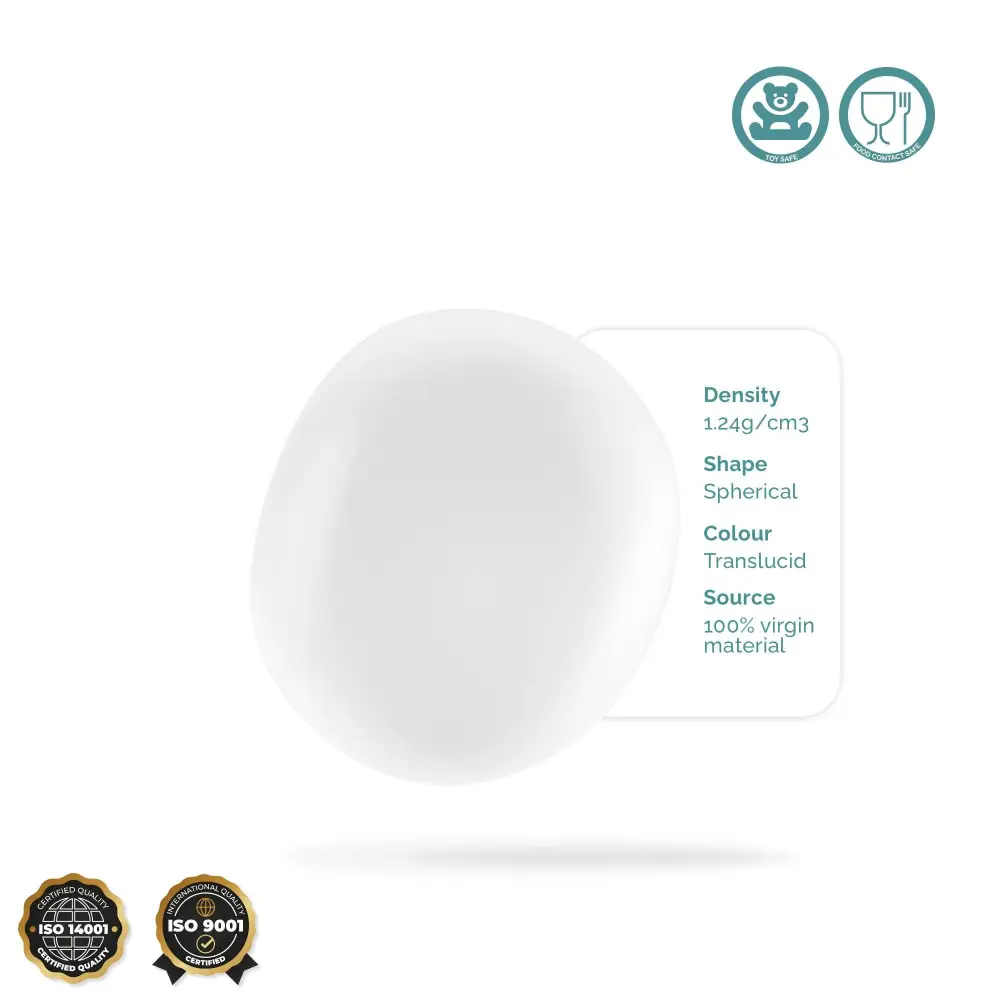
| Material | Polyethylene Terephthalate Glycol (PETG) |
| Grade | 100% virgin — no regrind or recycled content |
| Colourant | Colourless (high natural clarity) |
| Density | 1.27 g/cm³ |
| Food-contact-safe raw material | Yes (see note below) |
| Print temperature | 230–250°C (printer-dependent) |
| Bed temperature | 70–85°C |
| Available sizes | 500 g / 1 kg — bulk big bags available on request |
A Note on Food Contact
The raw PETG pellet material is food-contact safe. That certification applies to the raw pellet feedstock, not to finished printed parts — 3D-printed surfaces contain microscopic gaps between layers that can harbour bacteria, and most printers use brass nozzles that may introduce trace metals. If you intend a part for food contact, print it with a stainless-steel nozzle and apply a food-safe sealant, and assess suitability for your specific use. This remains the responsibility of the maker.
PETG vs PLA vs ABS — When to Choose PETG
Choose PETG over PLA when the part will see temperatures above 55–60°C, will be exposed to moisture or mild chemicals, or needs better impact toughness than PLA provides. PETG's heat deflection temperature of approximately 70–80°C under light load makes it suitable for automotive interior parts, outdoor fixtures, and any application where PLA would soften.
Choose PETG over ABS when you don't have a heated enclosure, want to avoid the warping challenges of ABS, or need transparency. PETG prints without warping in open-air systems, produces significantly less VOC and styrene emissions than ABS, and its natural colourless state allows translucent and light-diffusing applications that ABS cannot achieve.
High Clarity Applications
Because these pellets are colourless and PETG has inherently high transparency, parts printed from them achieve a glass-like clarity when post-processed (light sanding and polishing). This makes them particularly well-suited for light pipes, display enclosures, laboratory vessels, transparent prototypes, and packaging applications where optical clarity is required.
Processing Notes
PETG is hygroscopic — it absorbs moisture from ambient air and will string or produce bubbles if printed wet. Dry pellets at 65–70°C for 4–6 hours before printing. Bed adhesion is excellent on PEI at 70–85°C; PETG bonds strongly, so use a thin release agent or textured surface to avoid tearing the PEI on removal. For more, see our PETG, TPU & ASA settings guide and how to fix stringing and oozing. New to pellets? Start with our European buyer's guide to pellets.
Sourcing & Quality
These PETG pellets are produced by a specialist manufacturer certified to ISO standards, and shipped from Eolas Prints' stock in Cantabria, Spain. REACH and food-contact declarations are available on request. Available from 500 g and 1 kg up to bulk big bags for production-scale printing.
Original: $13.57
-65%$13.57
$4.75Product Information
Product Information
Shipping & Returns
Shipping & Returns
Description
Eolas Prints PETG pellets are 100% virgin, colourless polyethylene terephthalate glycol in granule form for pellet-fed 3D printers. PETG occupies the practical middle ground between PLA (easy to print, low heat resistance) and ABS (higher heat resistance, harder to print): it prints reliably without warping, offers significantly better heat and chemical resistance than PLA, and produces parts with good toughness and high surface clarity. In pellet form, PETG delivers these properties at a lower cost-per-kilogram than equivalent filament.
Key Specifications
| Material | Polyethylene Terephthalate Glycol (PETG) |
| Grade | 100% virgin — no regrind or recycled content |
| Colourant | Colourless (high natural clarity) |
| Density | 1.27 g/cm³ |
| Food-contact-safe raw material | Yes (see note below) |
| Print temperature | 230–250°C (printer-dependent) |
| Bed temperature | 70–85°C |
| Available sizes | 500 g / 1 kg — bulk big bags available on request |
A Note on Food Contact
The raw PETG pellet material is food-contact safe. That certification applies to the raw pellet feedstock, not to finished printed parts — 3D-printed surfaces contain microscopic gaps between layers that can harbour bacteria, and most printers use brass nozzles that may introduce trace metals. If you intend a part for food contact, print it with a stainless-steel nozzle and apply a food-safe sealant, and assess suitability for your specific use. This remains the responsibility of the maker.
PETG vs PLA vs ABS — When to Choose PETG
Choose PETG over PLA when the part will see temperatures above 55–60°C, will be exposed to moisture or mild chemicals, or needs better impact toughness than PLA provides. PETG's heat deflection temperature of approximately 70–80°C under light load makes it suitable for automotive interior parts, outdoor fixtures, and any application where PLA would soften.
Choose PETG over ABS when you don't have a heated enclosure, want to avoid the warping challenges of ABS, or need transparency. PETG prints without warping in open-air systems, produces significantly less VOC and styrene emissions than ABS, and its natural colourless state allows translucent and light-diffusing applications that ABS cannot achieve.
High Clarity Applications
Because these pellets are colourless and PETG has inherently high transparency, parts printed from them achieve a glass-like clarity when post-processed (light sanding and polishing). This makes them particularly well-suited for light pipes, display enclosures, laboratory vessels, transparent prototypes, and packaging applications where optical clarity is required.
Processing Notes
PETG is hygroscopic — it absorbs moisture from ambient air and will string or produce bubbles if printed wet. Dry pellets at 65–70°C for 4–6 hours before printing. Bed adhesion is excellent on PEI at 70–85°C; PETG bonds strongly, so use a thin release agent or textured surface to avoid tearing the PEI on removal. For more, see our PETG, TPU & ASA settings guide and how to fix stringing and oozing. New to pellets? Start with our European buyer's guide to pellets.
Sourcing & Quality
These PETG pellets are produced by a specialist manufacturer certified to ISO standards, and shipped from Eolas Prints' stock in Cantabria, Spain. REACH and food-contact declarations are available on request. Available from 500 g and 1 kg up to bulk big bags for production-scale printing.