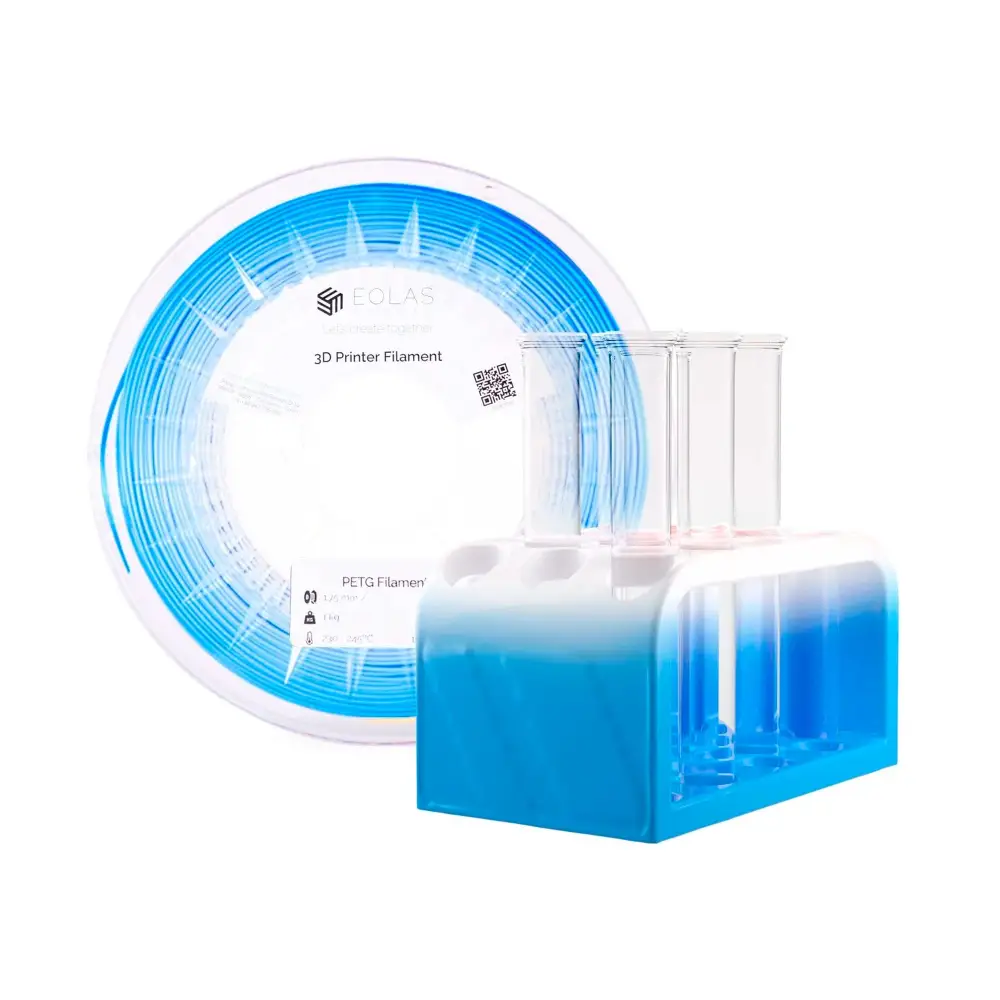
PETG Transition Filament
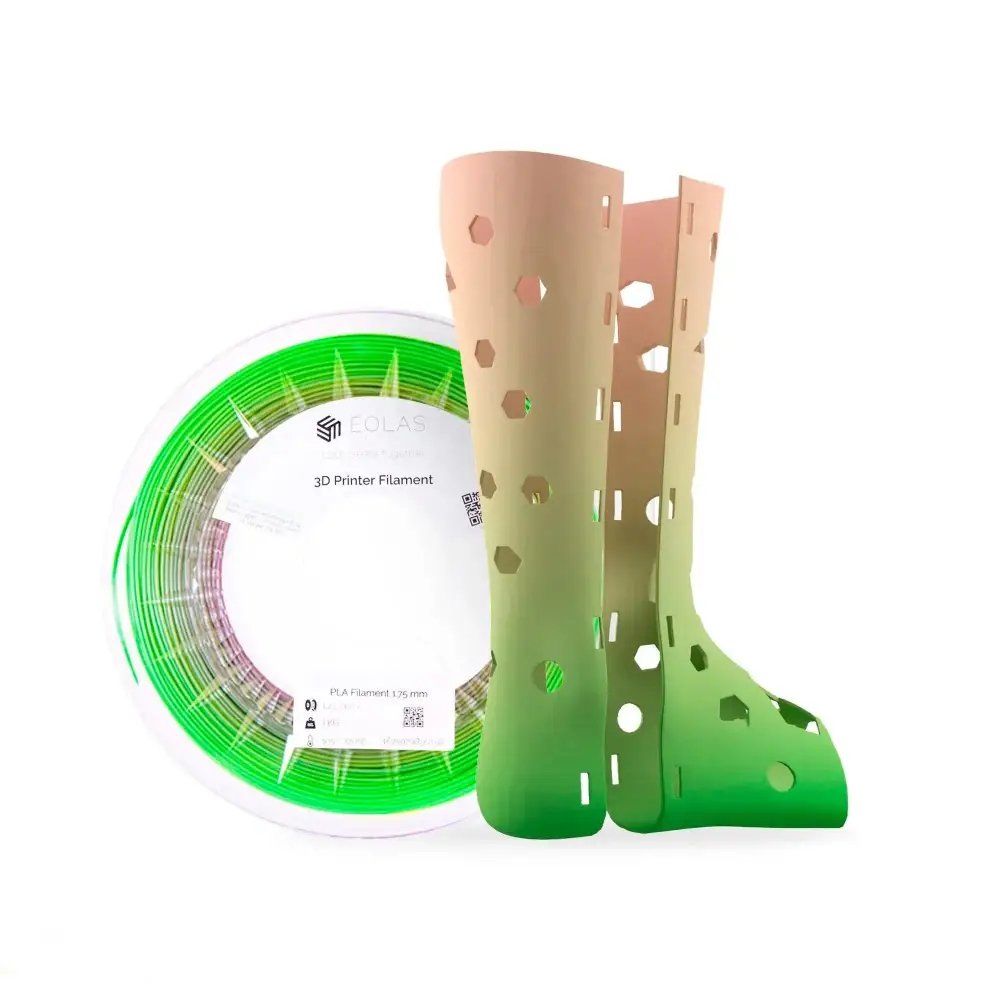
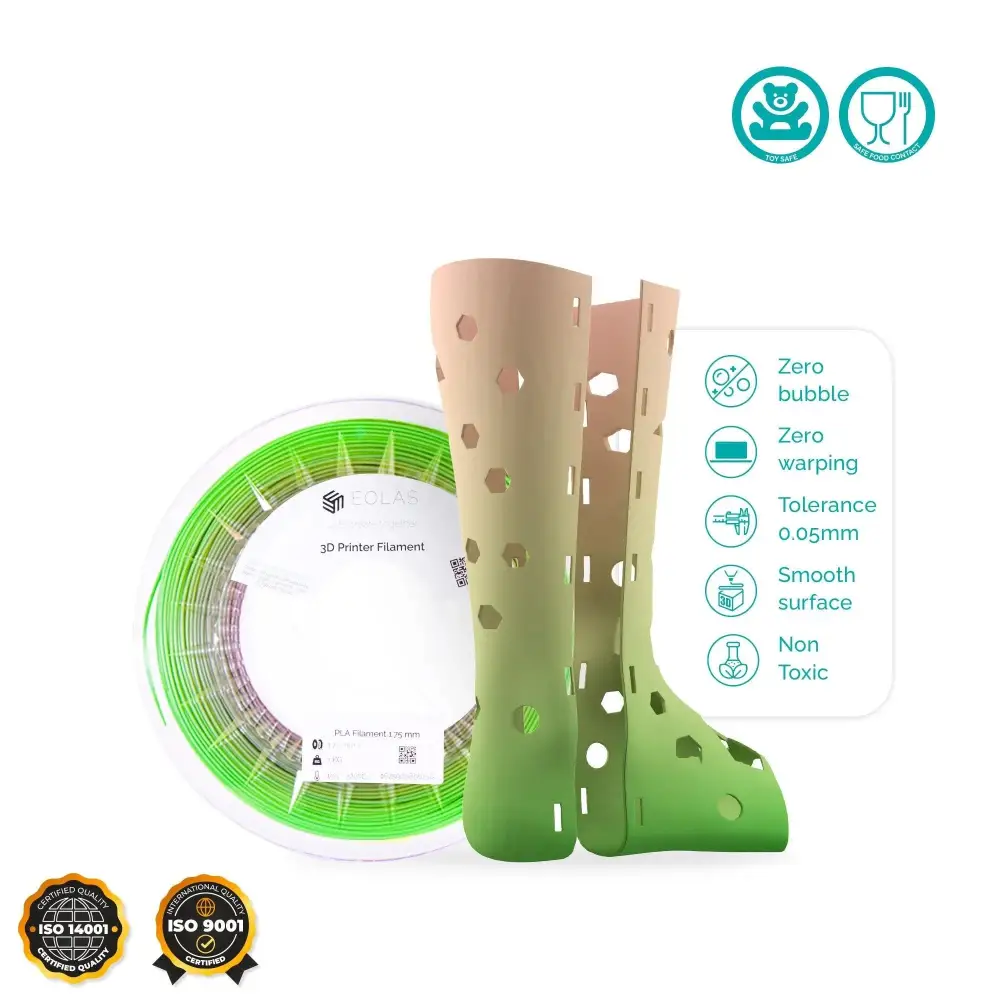
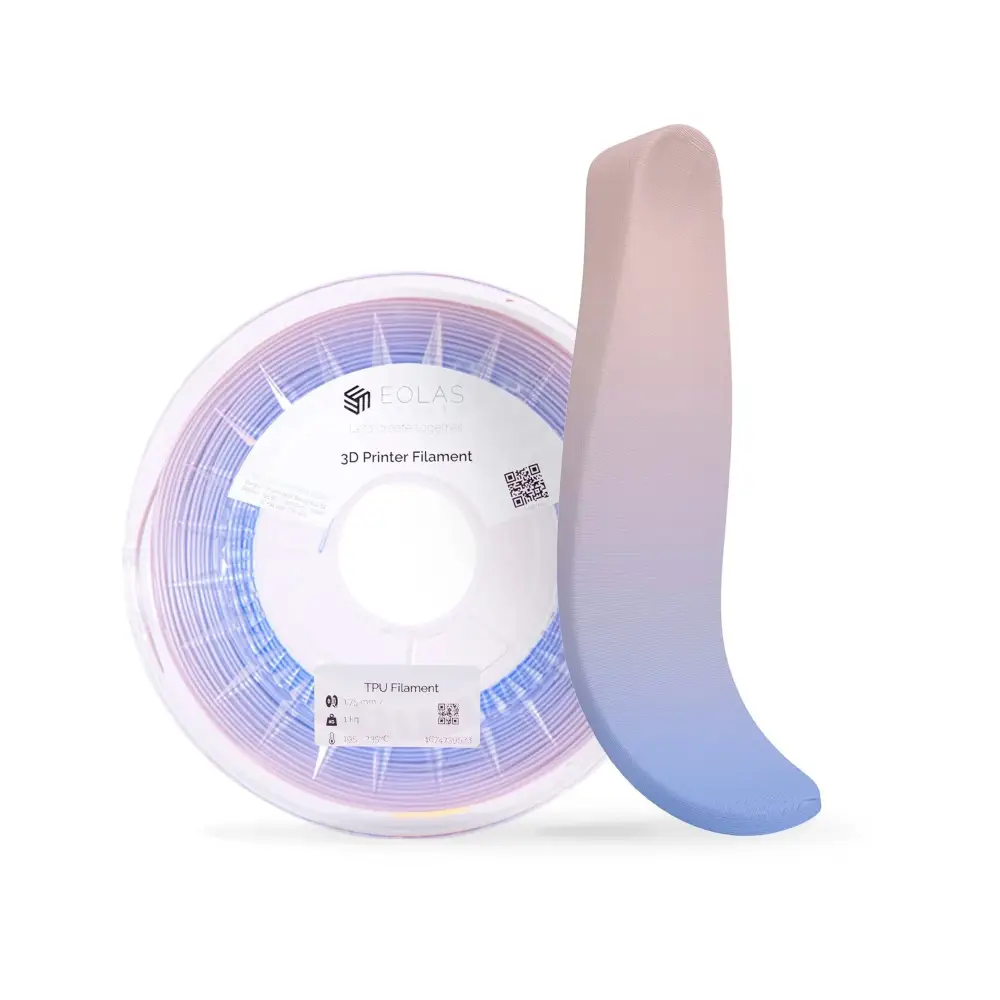
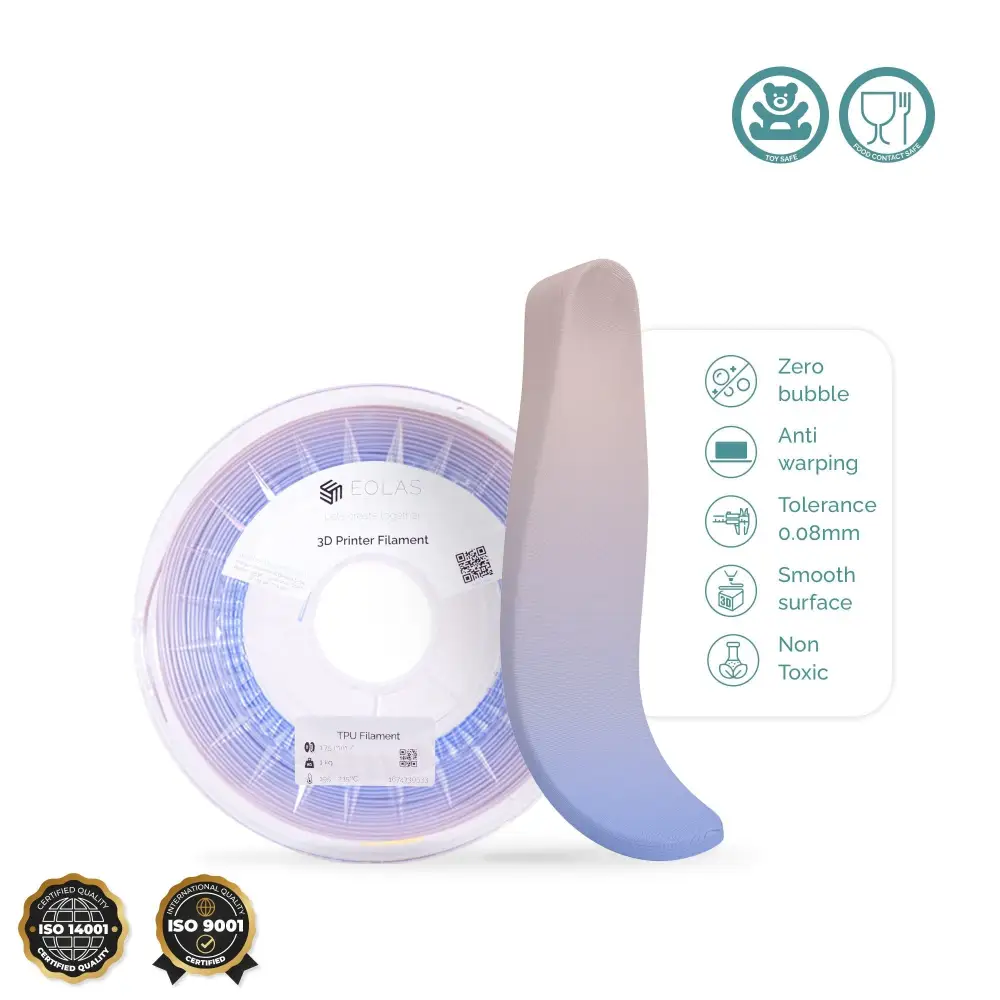
Eolas Prints PETG Transition filament combines the technical performance of PETG — strength, chemical resistance, and UV stability — with a natural gradient colour effect. Each spool is visually distinctive, with colours that shift gradually along its length.
Key Properties
| Colour effect | Natural gradient — unique on every print |
| Heat deflection temperature | 62°C |
| Density | 1.27 g/cm³ |
| Shrinkage | Virtually zero |
| UV resistance | Yes — suitable for outdoor applications |
| Chemical resistance | Good |
| Food-contact-safe raw material | Yes — virgin pellets and masterbatches certified to EU food-contact standards (see note below) |
| Skin contact safe (raw material) | Yes |
| Toy safe (raw material) | Yes |
| Diameter tolerance | ±0.05 mm |
A Note on Food Contact
Our food-contact certification applies to the raw filament material — the virgin pellets and masterbatches we manufacture from — not to finished printed parts. 3D-printed surfaces contain microscopic gaps between layers that can harbour bacteria, and most printers use brass nozzles that may introduce trace metals into the print. For this reason, no 3D-printed object can be guaranteed food-safe by the filament alone. If you intend a part for food contact, print it with a stainless-steel nozzle and apply a food-safe sealant — and assess suitability for your specific use. This remains the responsibility of the maker.
Recommended Print Settings
| Nozzle temperature | 230–245°C |
| Bed temperature | 60–90°C |
| Print speed | 20–100 mm/s |
| Cooling fan | 50–70% |
| Enclosure | Not required |
Why Transition Filament?
During production, as one colour changes over to another, a natural blend of the two is produced. Rather than purging this material, Eolas Prints spools it as transition filament — making productive use of every metre of virgin material and delivering a visually unique product with a gradient that no two spools share.
Recommended Applications
- Outdoor decorative parts and fixtures
- Containers and storage exposed to sunlight (with appropriate food-safe sealing for any food use — see note above)
- Functional prototypes with aesthetic requirements
- Consumer products, gifts, and personalised items
Manufactured in Spain
Manufactured at Eolas Prints' facility in Cantabria, Spain, under ISO 9001 and ISO 14001 standards. Available in 1.75mm and 2.85mm.
Original: $10.72
-65%$10.72
$3.75Product Information
Product Information
Shipping & Returns
Shipping & Returns
Description
Eolas Prints PETG Transition filament combines the technical performance of PETG — strength, chemical resistance, and UV stability — with a natural gradient colour effect. Each spool is visually distinctive, with colours that shift gradually along its length.
Key Properties
| Colour effect | Natural gradient — unique on every print |
| Heat deflection temperature | 62°C |
| Density | 1.27 g/cm³ |
| Shrinkage | Virtually zero |
| UV resistance | Yes — suitable for outdoor applications |
| Chemical resistance | Good |
| Food-contact-safe raw material | Yes — virgin pellets and masterbatches certified to EU food-contact standards (see note below) |
| Skin contact safe (raw material) | Yes |
| Toy safe (raw material) | Yes |
| Diameter tolerance | ±0.05 mm |
A Note on Food Contact
Our food-contact certification applies to the raw filament material — the virgin pellets and masterbatches we manufacture from — not to finished printed parts. 3D-printed surfaces contain microscopic gaps between layers that can harbour bacteria, and most printers use brass nozzles that may introduce trace metals into the print. For this reason, no 3D-printed object can be guaranteed food-safe by the filament alone. If you intend a part for food contact, print it with a stainless-steel nozzle and apply a food-safe sealant — and assess suitability for your specific use. This remains the responsibility of the maker.
Recommended Print Settings
| Nozzle temperature | 230–245°C |
| Bed temperature | 60–90°C |
| Print speed | 20–100 mm/s |
| Cooling fan | 50–70% |
| Enclosure | Not required |
Why Transition Filament?
During production, as one colour changes over to another, a natural blend of the two is produced. Rather than purging this material, Eolas Prints spools it as transition filament — making productive use of every metre of virgin material and delivering a visually unique product with a gradient that no two spools share.
Recommended Applications
- Outdoor decorative parts and fixtures
- Containers and storage exposed to sunlight (with appropriate food-safe sealing for any food use — see note above)
- Functional prototypes with aesthetic requirements
- Consumer products, gifts, and personalised items
Manufactured in Spain
Manufactured at Eolas Prints' facility in Cantabria, Spain, under ISO 9001 and ISO 14001 standards. Available in 1.75mm and 2.85mm.